
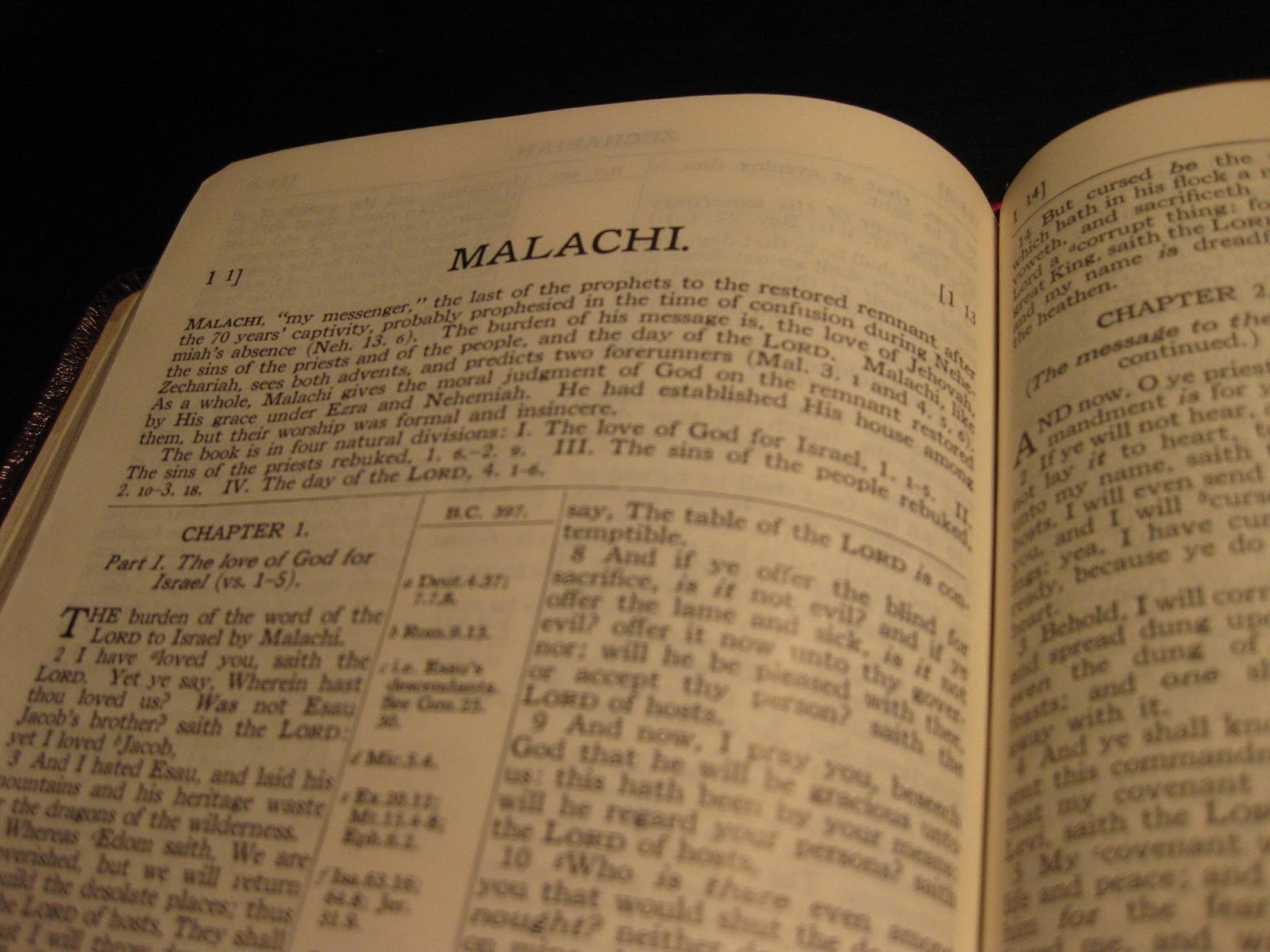
Malachi is a prophet nearly one hundred years after the return from exile. The temple had been rebuilt, but things were not going as they should have been. Instead of the hope of the New Jerusalem and the Messianic king of the previous prophets, Malachi finds that the post-exilic nation of Israel looks much like the pre-exilic nation. Corruption and injustice is still running rampant, with poverty and inequality a result.
In Malachi, God brings a series of claims against Israel. Each time, Israel disagrees with God. God then response to their disagreement by backing up His claims. God claims to love Israel despite their sin. He claims that their offerings are defiling His temple. God also ties idolatry with divorce as Israel is marrying foreign women and worshipping their gods. The people see the poverty and wonder why God is not responding to it. God condemns the people for not bringing the tithe, or tenth, to support the temple as required by His law. In other words, the human condition has not changed over the course of Israel’s history. They are still doing what is evil in the Lord’s sight. They need something further, some greater work to take place.
Finally, the people dispute the need to live for God when they can see that the wicked are profiting. Malachi presents a short story to emphasize the need to remember God’s character and promises. He reminds the people of the divine gift of the Scriptures. They point us to the past to inspire hope for the future.
Malachi reminds the people of the coming day of the Lord as a time of purifying of the people, but he also adds a message about the future of the remnant who are faithful to God. While the day of the Lord will be a fearful time for most, the faithful remnant will find it to be a time of joy.
Malachi closes with a call to remember the Torah (Law) and the Prophets. He indicates that they are a unified story that points to the future, when God will send a new Moses and Elijah to restore God’s people and heal their hearts as indicated in Deuteronomy 30, Jeremiah 31, and Ezekiel 36. In the close of his book, Malachi concludes the Torah and the Prophets with an indication to keep looking for a messenger and God Himself to come.
This sets up nicely for the introduction of John the Baptist and our Lord Jesus Christ in the next part of the Bible. The New Testament writers pick up where Malachi and the rest of the Old Testament leave off. However, there is a four hundred year period with no further prophetic messages. The prophets commanded Israel to be waiting and watching for the coming of the Messiah. We live in a period after the first coming of the Messiah. Now we live in anticipation for the second coming and the end of the story. Are you ready for the end?

 Joel McReynolds
Leave a comment