
This is the second part of a series on virtual church membership and the biblical definition of membership. In this post, I will briefly examine the nature of the church and the biblical metaphors. This builds on the post from last week, which you can read here.

The Nature of the Church
The nature of the church has already been alluded to in the previous section, but to make it clear: the church is composed of a regenerate membership. Russell Bow correctly states that easy church membership is an inadequate substitute for genuine conversion.[1] More accurately, understanding church membership as a conversion is not only inadequate; it is blatantly backward from the biblical instruction. Qualification for church membership always begins with repentance of sin and faith in Christ Jesus as Savior and Lord.[2] Not only can there be no real joy in church membership, but there can also be no true membership unless the membership has been gained on a profess of Christian experience.[3]
//clicktotweet.com/embed/G6oM4/3In his epistles to the churches, the apostle Paul frequently refers to the members of the local churches as ἅγιος (haggios). Many English translations translate this word as saints. The word means holy ones.[4] While holy could mean those who have moral purity, the context of some of the epistles suggests another use. It is more likely the idea of those who are sanctified by consecration to God.[5] The compendium of the New Testament makes it clear that the only way to become a haggios is to become a follower of Christ. Since Paul addressed the churches as gatherings of the holy ones, it should be inferred that the membership of the church consisted only of those who were saved.
//clicktotweet.com/embed/2TM3h/3/nChurch membership involves a further act of confession. Historically and scripturally, baptism is the sign of entrance into the New Testament church.[6] Baptism is not simply a precursor to church membership; it confers membership.[7] It is the initiating sign of an oath, not only to God but to a covenant body of believers. It is like the sign of circumcision for Israel in the Old Testament.[8] Sadie Crawley describes baptism as the door into the church.[9] Bobby Jamieson picks up on this image referring to participation in the Lord’s Supper. He wrote that one cannot participate in the family meal unless one has entered through the front door.[10] Mark Dever identifies the administration of these two ordinances, baptism and the Lord’s Supper, as one of the marks of a local church.[11] Choosing Christ means choosing the community of Christ as inaugurated through baptism.[12] In the Lord’s Supper, church members renew their pledge to Christ and to one another.[13]
//clicktotweet.com/embed/M13i0/3/n[1] Bow, Russell. The Integrity of Church Membership (Waco: Word Books, 1968), 28.
[2] Ackland, Donald F. Joy in Church Membership (Nashville: Convention Press, 1955), 13.
[3] Ibid, 150
[4] Brannan, Lexham Greek Lexicon.
[5] Ibid.
[6] Wellborn, Charles. The Challenge of Church Membership (Nashville: Convention Press, 1955), 25.
[7] Jamieson, Bobby. Going Public: Why Baptism is Required for Church Membership (Nashville: B&H Publishing, 2015), 164.
[8] Ibid, 162.
[9] Crawley, Sadie Tiller. The Meaning of Church Membership (Nashville: Sunday School Board of the Southern Baptist Convention, 1928), 19.
[10] Jamieson, Going Public, 165.
[11] Dever, The Church, 21.
[12] Willems, Kurt. “Does Church Membership Still Matter?: Reflections of ‘Belonging’ in Twenty-first Century Christianity,” Brethren in Christ History & Life 38, 2 (Aug 2015), 257.
[13] Jamieson, Going Public, 165.
Metaphors of the Church
The Bible frequently speaks of the church in pictures. It is to say not so much what the church is, but what the church is like.[1] Scripture speaks of the church in three primary metaphors.
[1] Winter, David. A Christian’s Guide to Church Membership: The Christian’s Responsibility Within the Church Family (Chicago: Moody Press, 1963), 11.
The Body of Christ

Although this term is used only in four of Paul’s letters, it is one of the most frequently identified. John Hammett claims it is from this image that the term member is derived.[1] In two instances, Paul uses the metaphor to speak to the nature of the church to Christ. Jesus is described as the head of the church. This implies a regenerate body that has recognized Jesus as Lord. Paul writes this to say that the church is subordinate to the will of Jesus and is connected with His mission.
Paul also used this metaphor to describe the way the church is composed and the way the members relate to one another. The institution of the church was founded by Jesus as a closely-knit fellowship so intimate and interdependent that it is called a body.[2] Due to the contemporary focus on the personal relationship with Jesus, many Christians don’t realize the depth of the secondary relationship that Christ establishes between individuals and the church.[3] It is both a duty and privilege for every saved person to unite with a local church.[4] Jesus has made the Christian a member of the body of Christ.[5]
[1] Hammett, Those Who Must Give an Account, 16.
[2] Clark, Wayne C. The Meaning of Church Membership (Valley Forge: Judson Press, 1950), 21.
[3] Dever, Mark. What is a Healthy Church? (Wheaton: Crossway Books, 2005), 22.
[4] Ackland, Joy in Church Membership, 4.
[5] Dever, What is a Healthy Church, 26.
The Temple of the Holy Spirit
In two of his epistles, Paul spoke of the church as the temple of the Holy Spirit. This speaks again to the regenerate, post-Pentecost nature of the church. The Spirit fits together the living stones[1] into a dwelling place in which God lives by His Spirit, on the foundation of the Scriptures, with Christ as the cornerstone.[2]
The Family of God
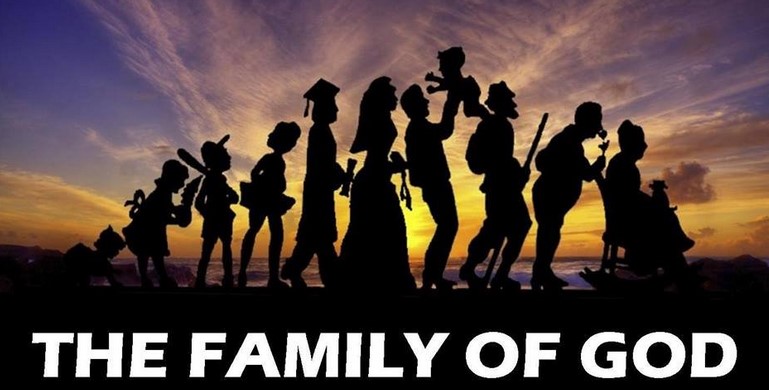
While the term family of God is not explicitly stated in the Scriptures, it is an inherent terminology.[1] Believers are able to refer to God as Father. They are called part of God’s household.[2] Paul refers to the members of the church as brothers in nearly all his letters, but in his instruction to Timothy he especially draws upon this idea as Timothy is to relate to the members of the church as fathers, brothers, mothers, and sisters.[3]
What does the nature of the church and the metaphors used about the church require of its members? And what does this mean for the virtual church? Join me next time as I examine the requirements and benefits of church membership and conclude the topic of the virtual church.

 Joel McReynolds
Leave a comment