
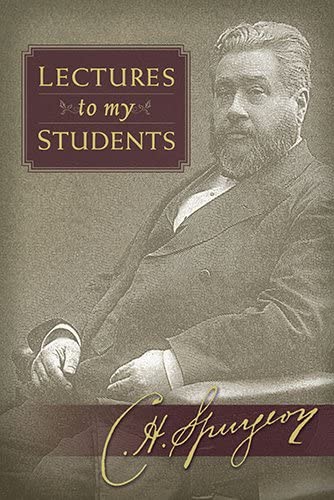
Having spent the last several weeks on some rather “meaty” topics, I think it is time to do a book review. This review is over one of the reading staples of pastoral ministry: C.H. Spurgeon’s Lectures to My Students. I must state up front that the book I checked out of the Roberts Library was an early copy that does not contain all of the chapters of later editions. This review will be a little bit different than normal. I completed this review as an assignment in my “Introduction to Pastoral Ministry” class at Southwestern Baptist Theological Seminary. In addition to a review and critical analysis, the directions for this assignment included a section on “Ministry Insights,” which I hope will be beneficial to you as well.
Biographical Sketch of the Author
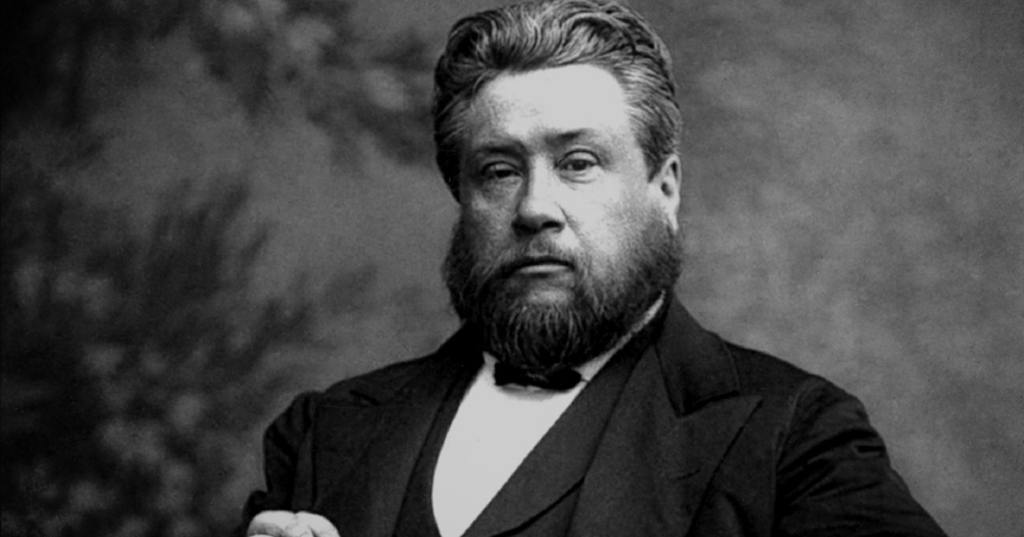
Charles Haddon Spurgeon was an influential English preacher in the nineteenth century. A Particular Baptist, he has become a vital figure in the Reformed Baptist tradition. Among various Christian denominations, he is known as the “Prince of Preachers.” Spurgeon was the pastor of the Metropolitan Tabernacle in London for nearly forty years. Spurgeon founded the Pastors’ College in the 1850s, which was renamed in his honor after his death. His skills as an orator were said to be spellbinding. His instruction regarding preaching and pastoring should be highly considered.
Summary of Content
This book is an abridged version, featuring thirteen lectures delivered to his students at the Pastors’ College. Each chapter focuses on an area of significance to those called to the pastorate. His topics range from fitness for ministry to preaching concerns to matters of pastoral working in the church.
In his first chapter, Spurgeon grounds the pastoral qualification in the man’s salvation. Pastors must understand themselves to be saved men (3). He must first care for his own salvation, for how can a man seek to persuade others to be something other than what he is? (7). His holiness must be vigorous, and his faith must be evident in all respects of his ministry (7, 12).
Having grounded the ministry in the minister’s faith, Spurgeon turns to the specific calling of the ministry upon a man. This ministry goes to only a few, for few can act as overseers if any are to be overseen (19-20). Spurgeon lists several signs a man may be called to the ministry: an intense, all-absorbing desire for the work (23), an ability to teach and fulfill the duties of the ministry (25), preaching acceptable to the people of God (29), and a measure of success in ministry (28).
The following two chapters turn to prayer, both private and public. Spurgeon notes the pastor should be distinguished as a man of prayer. He is always praying (40), but he is especially prayerful in the task of preaching. This applies to preparation (41), deliverance (43), and after the sermon (44). Regarding public prayer, Spurgeon gives several practical admonitions and warnings. His goal is to avoid “spoiling your church services by your prayers” (54).
Spurgeon dedicates several lectures to matters regarding the preaching work of the pastor. He is first concerned with the substance of the sermon, asserting that sermons should have authentic teaching in them (72). Here he focuses on the content of the sermon. Having established the base of what to preach, he turns to choosing a text on which to preach. He gives his personal method of choosing a text, including an appeal to the pastor to continually work on pulpit proclamations (97).
Though many warn against overly spiritualizing a text, Spurgeon affirms spiritualizing to an extent. He allows for drawing meanings that may not lie upon the surface of the text (103), but this is not to overlook the surface meaning or to violently strain the text by illegitimate spiritualizing (103). He emphasizes that the preacher should not allow the audience to forget the historical aspects of the text (108) but that the historical aspects may act as types, and the pastor may generalize universal principles from them (110).
Spurgeon gives some practical advice for the preacher in the following few chapters. First, he speaks about protecting and projecting the pastor’s voice. He warns against thinking too much about the voice or too little about the voice (117). The preacher should vary the force of his voice (124), modulate his tones (126), and speak as to be heard (122). However, he should also speak naturally and take care of the throat. Spurgeon also gives practical instruction on gaining and maintaining the audience’s attention. Distinct arrangement (140), plain speech (141), and saying things worth hearing (140) are among the most primary directions, though issues such as length (143-44), irresponsible repetition (143), and the use of surprise (147) and pause (148) supplement his teaching. While Spurgeon does not generally recommend impromptu speech (151), he remarks that the pastor should be prepared to deliver on the spur of the moment (155). For the pastor to be prepared to speak without any present study, he must study much (157). He must also practice such extemporaneous speaking frequently (161).
Turning from preaching matters, Spurgeon examines the minister’s “fainting fits,” a provocative title referring to the melancholy which affects most ministers sometimes in their ministries (167). While general sorrow is inescapable for the general populace (168), the pastor is especially prone to depression. Some of this is brought upon the pastor by the Lord for unique usefulness in ministry (169), while some are the nature of the ministry. After all, “who can bear the weight of souls without sometimes sinking to the dust?” (170). Spurgeon posits several times when the pastor is especially prone to such fits: the hour of great success (172), before any outstanding achievement (173), in times of unbroken labor (174), and when troubles multiply (176). His appeal is that ministers must not be dismayed by such soul trouble but should expect it as ordinary ministry experience (178).
“Who can bear the weight of souls without sometimes sinking to the dust?”
The pastor’s conduct among the people, especially outside of the church service, is addressed in the twelfth chapter. While the people abhor ministers who act in artificial and unmanly ways, the pastor must remember that wherever he is, he is on duty as a minister of the gospel (181). The Christian minister must be an approachable man whose face invites people to make him a friend (183). Spurgeon suggests having a good word for each family member, down to the little girls (183). The pastor must have a great heart if he is to have a great congregation. He should not be a dummy, acting in ways that would ruin his pulpit ministry (185). He should be firm in his principles and bold in defending them but gentle in his argument (188).
As a closing chapter, Spurgeon’s instruction regarding workers with slender apparatus is enigmatic. By a slender apparatus, he refers to a lack of books from which to study. He encourages the pastor to do his best to have a library while understanding that many may not be able to build one on their own. He encourages the church to provide for the minister such a library (190). However, if a church is unable and the pastor can only purchase a few books, he should purchase the best available (193) or borrow books from friends (194). He ultimately concludes the pastor may learn solely from the Bible if needed (195), though he can draw from experiential learning such as studying others (199) and studying himself (198). The pastor should learn from experienced saints (199) and the unbeliever (200), but should particularly be at the deathbeds, for “I have heard humble men and women in their departing hours talk as though they were inspired, uttering strange words aglow with supernatural glory” (200). Though a seemingly strange conclusion, it makes sense with Spurgeon’s challenge for the pastor to be constantly learning and never slack in his work.
Critical Evaluation
Spurgeon explained in his introduction that he desired to keep his counsels alive in the memories of those who heard them and impress them upon others who dwell beyond his classroom (vi). In this, he has exceedingly succeeded. His collection of lectures has become a manual for the minister, a classic for every pastor, and required reading in many seminary classes.
Being drawn from his lectures, the writing is engaging for the reader. Spurgeon fills the pages not only with practical instruction but interjected anecdotes and humorous comments (v). The chapters are short and easy to read in one sitting. They are generally self-contained, although occasionally the topics overlap with one another. Despite this overlap, Spurgeon does not seem to repeat himself.
The one repetitive nature of Spurgeon’s lectures is highly needed: the call for the minister to excel in the pastorate. He wrote, “The solemn work with which the Christian ministry concerns itself demands a man’s all, and that all its best” (vi). He presents a similar call in each chapter but contextualizes it to the chapter. The pastor’s work requires the highest degree of godliness (12). The ministry needs the very best of men and not those who cannot do anything else (36). We not only ought to pray more but we must (49). He is constantly calling the minister to reach higher, to do better, and to be the best he can be for the glory of the Lord.
The ministry needs the very best of men and not those who cannot do anything else
Some of Spurgeon’s applications are somewhat humorous to the modern reader due to changes in attitude and technology. Spurgeon speaks of dismissing some from Pastors’ College because of physical defects he finds detractive. What a societal uproar such a proclamation would cause in the twenty-first century! Spurgeon could be sued for his refusal to admit a person solely on that basis. Further, the need for preachers to be large in the chest to preach with enough voice to be heard is no longer seen as a requirement due to microphones and amplification.
More importantly, some of Spurgeon’s chapters could nearly be left out of this work and should be largely ignored by the preacher. Spurgeon states that the matter of the text should be harmonious with the text (74), but it must go further than this. The sermon should be drawn directly from the text, the structure included. The most obvious way to ensure the sermon springs from the text (74) is to use a manner of preaching which follows the flow of the biblical text. This cannot be accomplished well when one pulls one verse from which to preach, such as Spurgeon frequently did and advocates (103).
Likewise, the choice of text should not be such an agonizing selection regularly, as Spurgeon indicates (88). While there is difficulty in determining the text, the preacher should primarily preach through books of the Bible. This allows the preacher to spend less time agonizing over what text to preach week-to-week and allows him to dig into expositing the Word for the people under his teaching. However, his instructions on choosing the text may be applied to choosing which books to cover or for special occasions when the pastor is not fulfilling his normal obligations.
Spurgeon’s exhortation to spiritualize the text should be taken with considerable restraint (103). While he warns against violently straining a text by illegitimate spiritualizing, his emphasis on symbolic teaching and allegory not only allows for such spiritualizing, it encourages it. The preacher should avoid getting wrapped up in the minute and separate facts (110). Instead, he should preach according to the intent of the author.
his emphasis on symbolic teaching and allegory not only allows for such spiritualizing, it encourages it.
Despite these downfalls, this book is encouraged to be read and studied thoroughly by any man who is called as a pastor of any denomination. The principles and practical instruction are of superior quality and have endured the passage of time. The pastor will find it challenging at times, comforting at others, and generally encouraging to his ministry.
Ministry Insights
Some elements of this work wrought my special attention, which bear repeating and comment. First, Spurgeon’s challenge to the pastor is that his repentance should be as notorious as his sin (9). While hoping that my sin will be minimal, the reality is that every pastor is first human. I am not a superhuman, unable to sin. Only one can claim such, else the salvation we proclaim would be unnecessary. However, this injunction toward repentance caused me to consider my reputation. Is my repentance such that it could be described as “notorious?”
The statement that fervent lovers of souls do not wait until they are trained; they serve the Lord at once (34) was such an insight I could not bear not to share it. In many churches I have served, evangelism was of such a lack that I could not motivate the congregation to practice it. I held training, including a practical component, but still, this was rejected. How can the church claim to be lovers of souls when they refuse to serve even after training?
Spurgeon pictured the minister as a prophet of Israel wearing the breastplate bearing the names of the people as he makes intercession for them in the temple (46). This caused me to consider my attitude toward intercessory prayer. Coupled with his statement about neglecting to pray showing an arrogant man who thinks he can do the work of God in his own power (49), I am reevaluating how our staff meetings are spent. We tend to focus more on practical matters – events, calendaring, and personnel issues. We must spend more time praying for our people!
Practically the whole chapter on the minister’s “fainting fits” encouraged me. I seem to have so many days of melancholy upon me as of late. Being reminded that this is common for all people, but especially for ministers, comforted my soul. Considering all who have passed from this life recently and the busyness of life this semester, multiple sources of such weight are pressing upon me. A depressive mood is not something to be concerned about but should be expected.

 Joel McReynolds
Leave a comment