
Today’s post concludes the series on the authority of the bible by examining liberalist teachings and comparing them with a verbal plenary inerrantist view of Scripture.
Liberalism teaches that the Bible was solely written by the apostles and the prophets. They may have been authorized by God to write, but does that mean that they wrote the Bible correctly? They may have authority, but were they right? If they wrote solely in their authority, could they have erred?

Such questions must be considered and answered, for if the prophets and the apostles solely wrote on their own, then the Bible is merely a human document that may contain errors. The Bible may merely be ethical teachings and history, but not the full word of God. The Bible may contain the word of God but not be the word of God. This liberal view of the Bible denies the full authority of Scripture by denying that it is inerrant and infallible. It makes the Bible something that is merely human, thereby making the Bible equal to the other writings of men, such as the Koran or the writings of Gandhi. This view of the Bible opens the door to religious pluralism. It condescends the Bible to humanity, making man judge over what is authoritative and what is not.

We don’t believe that the Bible is merely human writing nor that it simply contains the Word of God. Rather, we believe that the Bible is the Word of God because it was not simply written by men. It was written in an amazing partnership between mankind and deity.
The apostles insist that supernatural authority is inherent in the Scriptures. 2 Timothy 3:16 says, “All Scripture is breathed out by God” while Peter claimed, “For no prophecy was ever produced by the will of man, but men spoke from God as they were carried along by the Holy Spirit” (1 Peter 1:21). In John 14, Jesus declared that these authorized men would be empowered by God’s Spirit to write exactly what God wanted them to say, for the Spirit would teach them all things and help them remember Christ’s words.
There are many theories on how exactly this partnership between man and the Spirit works, but the best explanation is the verbal plenary theory. Verbal simply means to use words, while plenary means full. Under this theory, God inspired these men by His Spirit to write not just their ideas of what God wanted them to say. Rather He utilized each writer’s personality and experiences to write the exact words He wished to convey to His people.
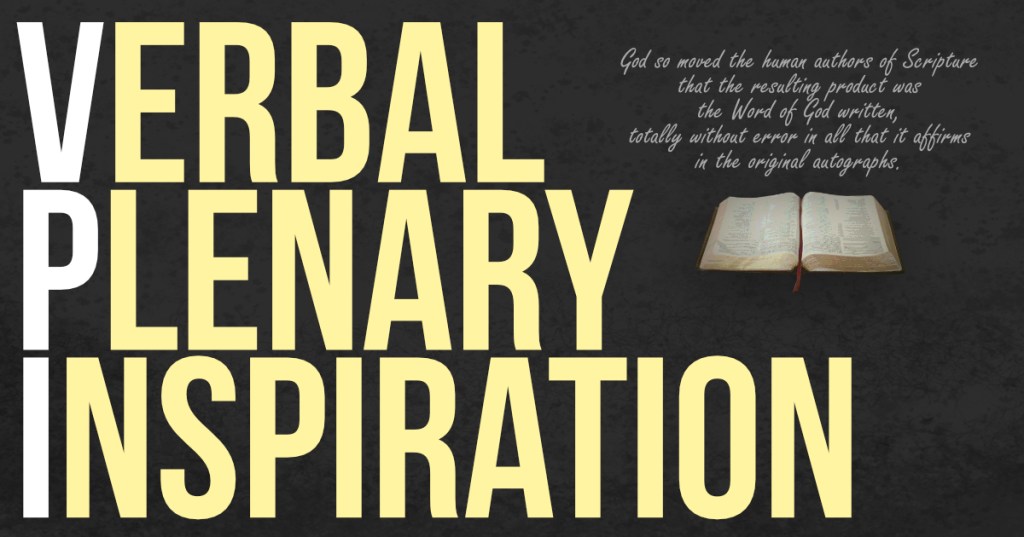
If the Bible is the Word of God, it must reflect God’s character. Just as God cannot lie or err, so also the Bible, His Word, cannot lie or err. To claim that the Bible has errors or lies in any way impinges on God’s character. God’s Spirit guided in facts. Whether it be historical, scientific, or theological topics, God’s Word must be true. God guided in word. Perhaps we would have used a clearer word or word usage in some places, but God chose exactly what he wanted the biblical authors to say. He guided in reflecting the attitude of God. What the Bible calls sin is sin because God has declared it to be sin. In the Bible, God is present both semantically with his words and personally by his Spirit.
Set forth your case, says the LORD; bring your proofs, says the King of Jacob. Let them bring them, and tell us what is to happen. Tell us the former things, what they are, that we may consider them, that we may know their outcome; or declare to us the things to come. Tell us what is to come hereafter, that we may know that you are gods; do good, or do harm, that we may be dismayed and terrified. Behold, you are nothing, and your work is less than nothing; an abomination is he who chooses you. — Is 41:21-24//biblia.com/api/logos.biblia.js logos.biblia.init();
In Isaiah 41, God challenged the idols to present their cases against him. The doctrine of inspiration issues the same challenge. The assurance of inspiration can be found by examining the evidence for it. Inspiration is evidenced by the witnesses to it. From Christ to the nineteenth century, the church universally held to the belief that the Bible was the inerrant, inspired word of God. It wasn’t until biblical criticism rose to prominence that the inspiration and authority of the Bible came into question. Inspiration is evidenced by the prophecies that have been fulfilled. Events predicted thousands of years prior to their fulfillment have all come to pass. Science and historical discoveries have consistently demonstrated the accuracy of the text. Finally, the preservation of the biblical text throughout several millennia has remained amazingly accurate. The discovery of the Dead Sea Scrolls has proven just how accurate the biblical text has remained throughout time. The evidence lends credibility to the Bible’s claims about itself.

Conclusion
Any attempt to separate the authority of the Bible from the authority of Christ or the authority of the Spirit is in vain. As demonstrated, the Bible’s authority rests on the authority of God through both His Spirit and His Son. The Bible is the inspired Word of God. As such, it is authoritative. The authority of the Bible does not rest on our ability to understand it. Isaiah 55 tells us that God’s thoughts are higher than our thoughts and His ways higher than our ways. We study the Word of God to understand it the best we can. That understanding must lead to us adapting our lives to the Bible, not adapting the Bible to our lives. His Word is the perfect and inspired authority by which every believer must live.
Referenced Works
These references are for the whole series on the authority of the Bible. If you have questions or would like to explore further, I recommend checking them out. If you purchase one of the Logos versions using my link, I receive a Logos credit that will help me with further research.
Carl F.H. Henry’s God, Revelation, and Authority (Logos Bible Software)
Greg Gilbert’s Why Trust the Bible (Logos Bible Software)
R.C. Sproul’s Can I Trust the Bible (Logos Bible Software)
Millard J. Erickson’s Christ Theology, 3rd Edition (Logos Bible Software)
https://www.cru.org/us/en/train-and-grow/spiritual-growth/the-authority-of-scripture.html
https://bible.org/seriespage/1-authority-bible

 Joel McReynolds
Leave a comment