
Having spent considerable time examining the history and tenets of the Prosperity Gospel in the previous posts, I thought it would be best to stay with that theme for another couple of weeks. So in the next few posts, I will write about the challenge the Prosperity Gospel poses to the global missions efforts of Orthodox Christianity.

Evangelical churches are falling behind in missions work despite many evangelical denominations’ focus on global missions. Without a doubt, Pentecostal Spirit-filled churches represent the fastest-growing branch of world Christianity.[1] Many of these newer Charismatic-Pentecostal churches embrace Prosperity Gospel teachings which say that material goods are a specific blessing from God.[2] These teachings have been a dominant theme of many modern Pentecostal preaching,[3] but that is not to say that the Prosperity Gospel and Pentecostalism are identical.[4] In fact, perhaps the greatest critiques of the Prosperity Gospel have come from those in Pentecostal circles. Yet the fact remains that some estimate that the Prosperity Gospel is the fastest-growing segment of the Charismatic-Pentecostal movement.[5]
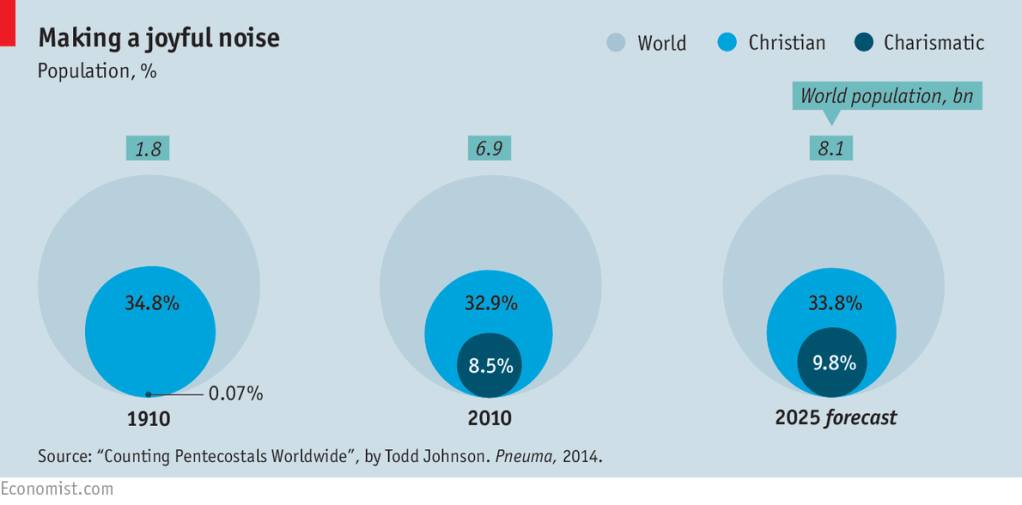
It has seen considerable growth globally. It has spread onto the African continent, especially the nations of Nigeria, Kenya, Uganda, and South Africa. The Prosperity Gospel has had a notable impact in Asia, spreading into such diverse nations as India and South Korea. It has even rooted in the People’s Republic of China due to the churches of Wenzhou.[6] The Prosperity Gospel has also migrated into Latin America, albeit to a lesser extent than in Africa and Asia.

Many of the teachings of the Prosperity Gospel draw criticism from evangelical churches, as it should. Numerous Prosperity Gospels’ teachings are contradictory to the Scriptures and have detrimental pragmatic effects upon those who follow those who preach it. Yet within the discipline of missions, this threat has gone largely unnoticed and has caused much harm to individual lives and the global Christian witness.[7] Those involved in mission work must understand the serious impact of the Prosperity Gospel on those whom they seek to evangelize and be able to counter the false gospel of prosperity teaching without alienating the people who follow those teachings.

The goal of these posts is to equip and encourage evangelical missionaries regarding the Prosperity Gospel. First, one must understand the distinctives and general teaching of the Prosperity Gospel. Next is understanding the historic spread of the Prosperity Gospel around the world. After examining the spread, one must note the effects that the Prosperity Gospel has had upon the populace. Finally, understanding some steps for missionaries to take in combatting the spread of the Prosperity Gospel.
[1] Attanasi, Katherine and Amos Yong. Pentecostalism and Prosperity: The Socio-Economics of the Global Charismatic Movement (New York: Palgrave MacMillan, 2012), 2.
[2] Anderson, Allen and Michael Bergunder, André Droogers, Cornelis van der Laan. Studying Global Pentecostalism: Theories and Method (Berkeley: University of California Press, 2010), 116.
[3] Yong, Amos and Estrelda Y. Alexander. Afro-Pentecostalism: Black Pentecostal and Charismatic Christianity in History and Culture (New York and London: New York University Press, 2011), 141.
[4] Ibid, 185.
[5] Vines, Jerry. SpiritWorks: Charismatic Practices and the Bible (Nashville: Broadman & Holman Publishers, 1999), 158.
[6] Spadaro, Antonio. “The Prosperity Gospel Preachers: Dangerous and Different” (La Civiltà Cattolica: 2018), 1-2.
[7] Williams, G. (April 2017) Glyn Williams, “The Prosperity Gospel’s Effect in Missions: An African Perspective,” Bachelor of Theology Honours, South African Seminary, x.
Distinctives of the Prosperity Gospel
The most important part of any battle is to know your enemy. The reality is that many of the people caught in the trap of the Prosperity Gospel have not experienced the life-transforming power of a salvific faith in Jesus Christ. It is spiritual warfare. The missionary must know the enemy. Therefore, this first section will seek to address the major teachings of Prosperity Gospel preachers.

Yet therein lies one of the major issues with the Prosperity Gospel: there is not a defined Prosperity Gospel doctrine. The Prosperity Gospel is a movement, not a monolithic organization.[1] However, that is not to say there is a lack of similar characteristics. The basic premise is that God wants believers to have the best of everything.[2] The general teaching of the Prosperity Gospel can be summed up in this principle: be faithful in your giving and God will reward you financially.[3]

The Prosperity Gospel is closely tied to economic capitalism.[4] It is a modern variation of Pentecostalism that is premised on the belief that a biblical covenant between the individual believer and God guarantees the believer blessings of health and wealth, provided he or she demonstrates adequate faith.[5] In other words, prosperity is viewed as a divine right for the believer.[6] While capitalism and the Prosperity Gospel have a shared goal of achieving a state of well-being, their departure points are divergent. Capitalism is grounded in economics, but the Prosperity Gospel is based on religion.[7]

The Prosperity Gospel contains grains of biblical truth that are distorted to fit the hermeneutic lens of the preacher in his context.[8] Often these preachers utilize a relatively small number of proof texts to justify their positions. They appeal to natural human desires for success that promise much and require little from their followers.[9]
Some key elements of the Prosperity Gospel include speaking the right words, invoking a universal law of success with those words, and having adequate faith in oneself.[10] This system relegates the Spirit of God to a metaphysical force that can be welcomed or opposed by contrasting forces of fear and faith. If an individual or congregation has adequate faith, this force can be activated through proper words.[11] The majority of Prosperity Gospel preachers point to their own success, often speaking of their out-of-body experiences or additional visions of Jesus. Some of these dreams or visions contradict what the Bible says but are upheld as having equal or greater authority than the Bible.[12] Some of these preachers appeal to the occult to entice this metaphysical God to enact their wishes.[13] Many adherents claim to have experienced miraculous healing or success attributed to this gospel.[14]

The Prosperity Gospel is a highly personalized faith.[15] It is an egocentric gospel teaching that God wants believers to be materially prosperous in the here and now.[16] Yet the reality is that its teachings are not truly biblical, but a reshaping of Christianity into the capitalistic image of its birthplace, contemporary America.[17]
[1] Hanegraff, Hank. Christianity in Crisis (Eugene: Harvest House Publishers, 1993), 12.
[2] Vines, SpiritWorks, 159.
[3] Jones, David W. and Russell S. Woodbridge. Health, Wealth, & Happiness: Has the Prosperity Gospel Overshadowed the Gospel of Christ? (Grand Rapids: Kregel Publications, 2011), 13.
[4] Koning, J. “Beyond the Prosperity Gospel: Moral Identity Work and Organizational Cultures in Pentecostal-Charismatic Churches in Indonesia” New Religiosities, Modern Capitalism, and Moral Complexities in Southeast Asia (Singapore: Palgrave Macmillan, 2017), 40.
[5] Wrenn, Mary V. “Consecrating Capitalism: The United States Prosperity Gospel and Neoliberalism” Journal of Economic Issues (Taylor & Francis Ltd) 53, no. 2 (June 2019), 425.
[6] Vines, SpiritWorks, 160.
[7] Attanasi and Yong, Pentecostalism and Prosperity, 88
[8] Jones and Woodbridge, Health, Wealth, & Happiness, 18.
[9] Ibid.
[10] Ibid, 31.
[11] Hanegraaff, Christianity in Crisis, 66
[12] Ibid, 78.
[13] Ibid, 84.
[14] Jones and Woodbridge, Health, Wealth, & Happiness, 19.
[15] Attanasi and Yong, Pentecostalism and Prosperity, 2.
[16] Jones and Woodbridge, Health, Wealth, & Happiness, 15.
[17] Vines, SpiritWorks, 165.
Next week I will continue the challenge of the prosperity gospel to missions by examining the history of the movement. How did it begin and how did it spread?


 Joel McReynolds
Leave a reply to Steps to Combat the Prosperity Gospel – Joel McReynolds Cancel reply